Scholars from the International University of Tourism and Hospitality visited the United Kingdom as part of research project BR28713129, “Research into the Introduction and Spread of Islam in Kazakhstan Based on Archaeological and Written Sources.”
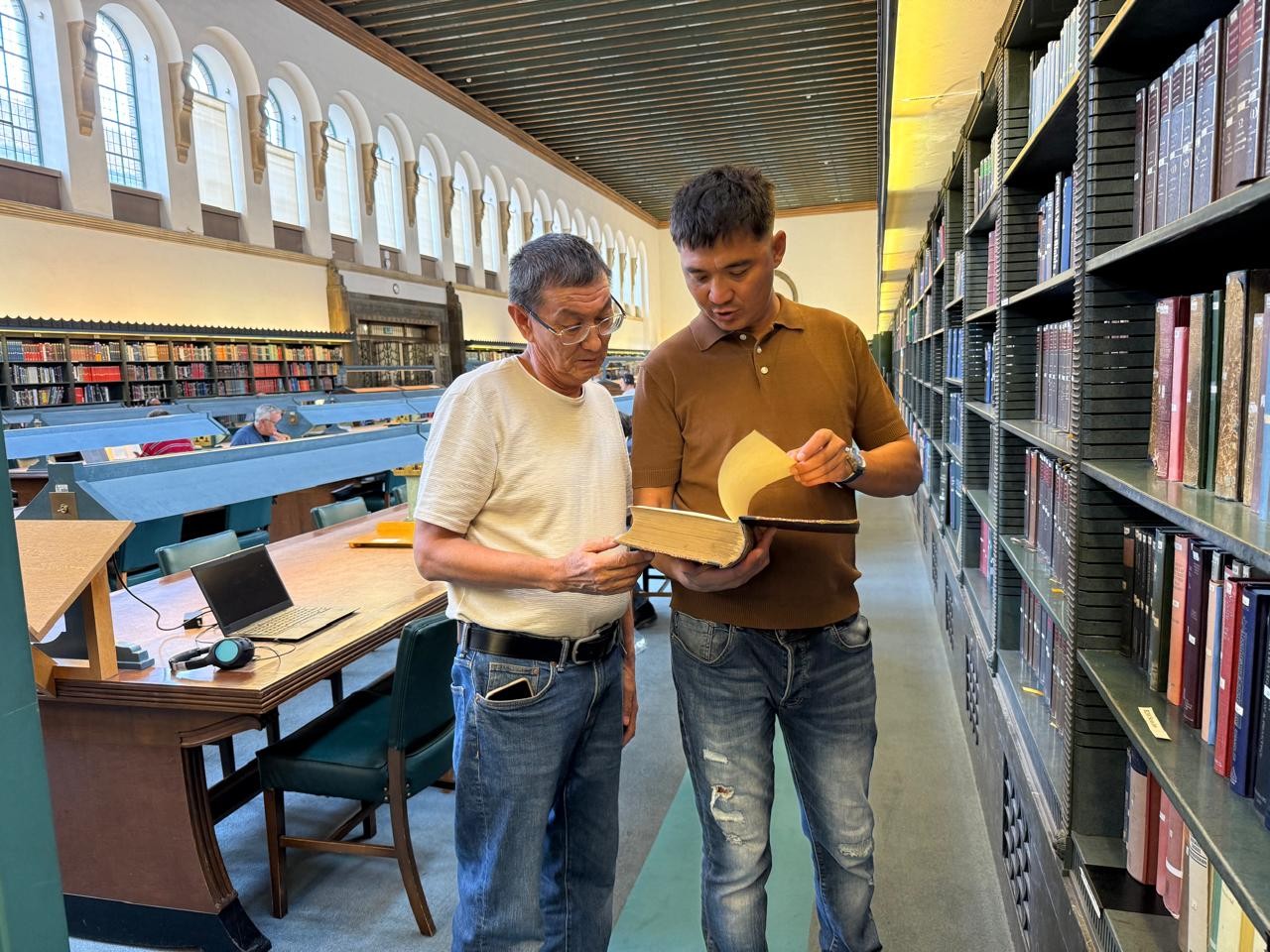
The visit aimed to study written sources, manuscripts and archival materials relating to the history of Islam in Kazakhstan and Central Asia held in Cambridge University libraries and the British Museum library, and to strengthen international academic ties.
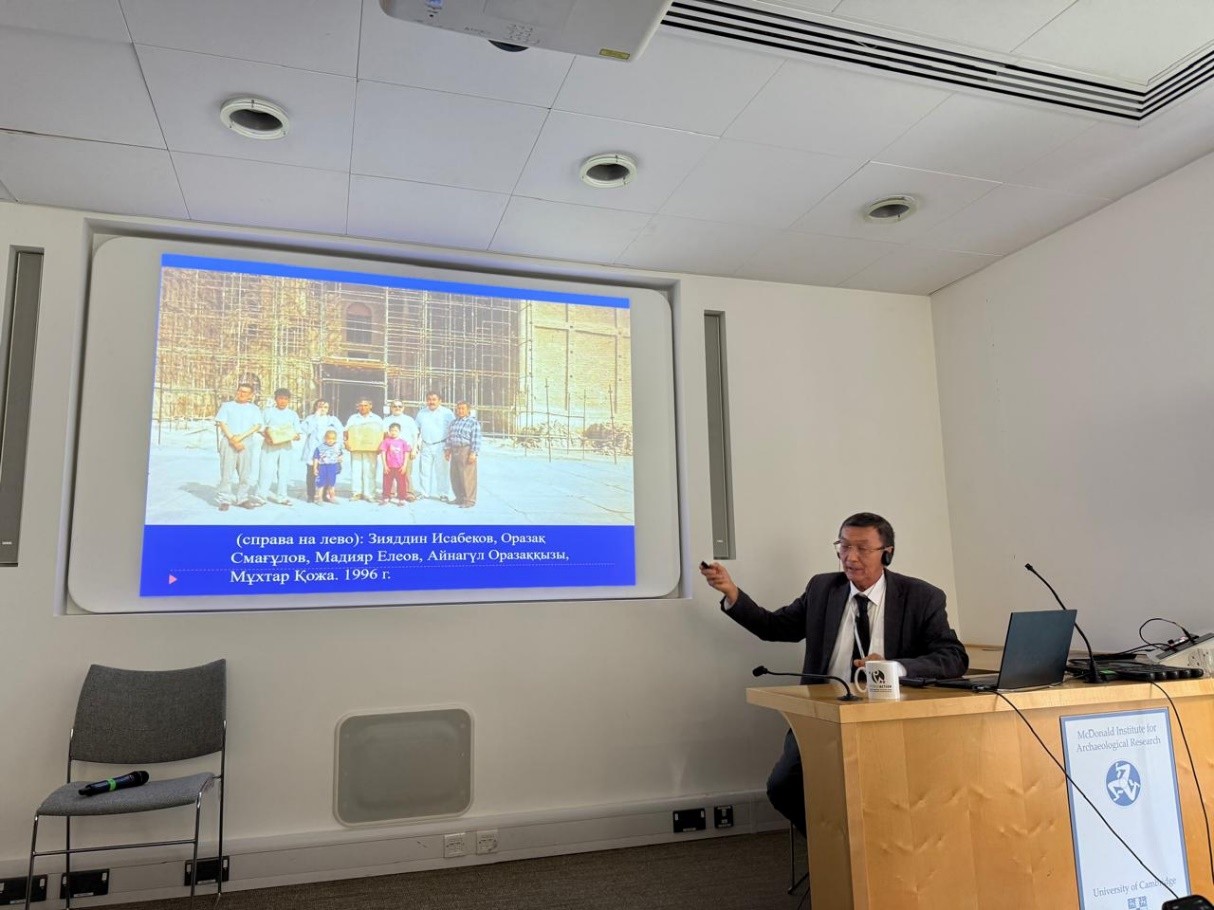
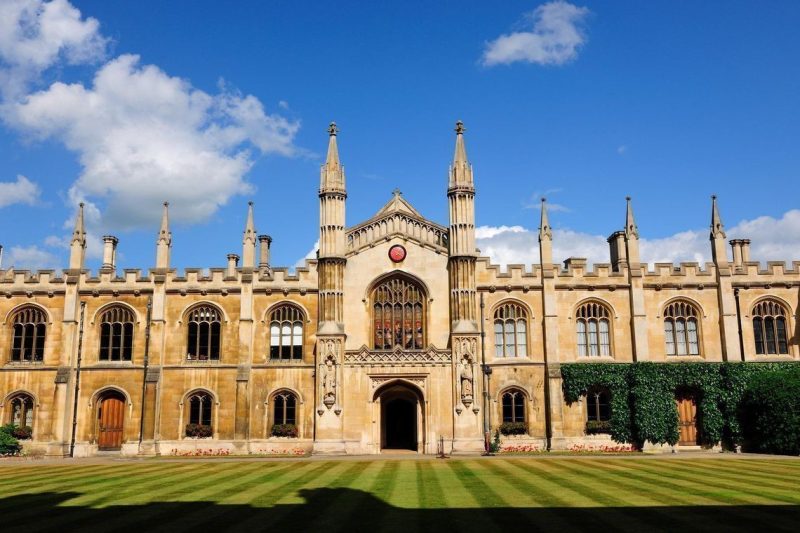
On 29 September 2026, the university’s scholars participated in the international conference “Archaeological Approaches to Urbanism and Urban Sustainability in Medieval Central Asia,” held at King’s College, University of Cambridge. Discussions focused on medieval urban culture, the spread of Islam and interdisciplinary approaches to archaeological research.
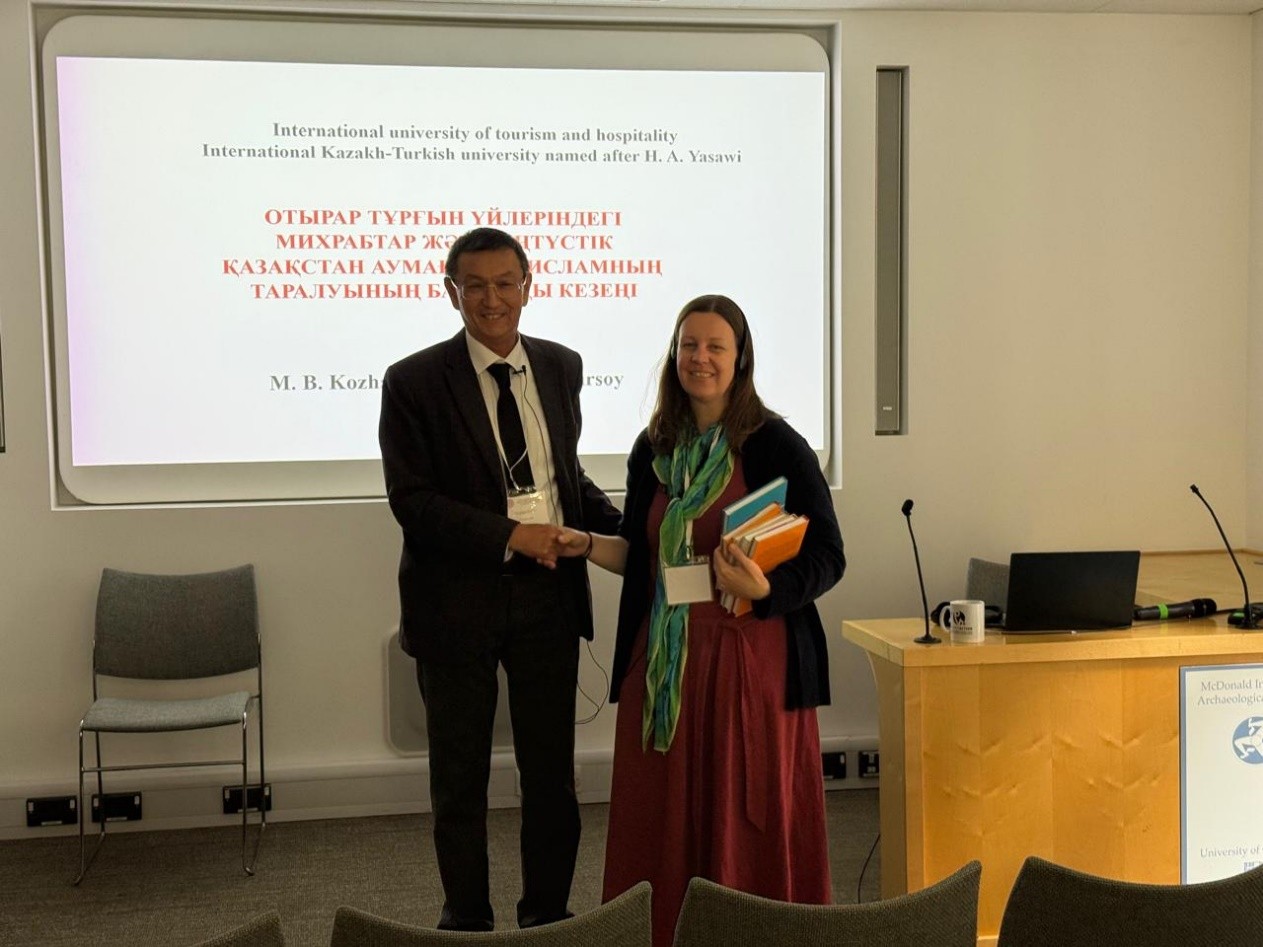
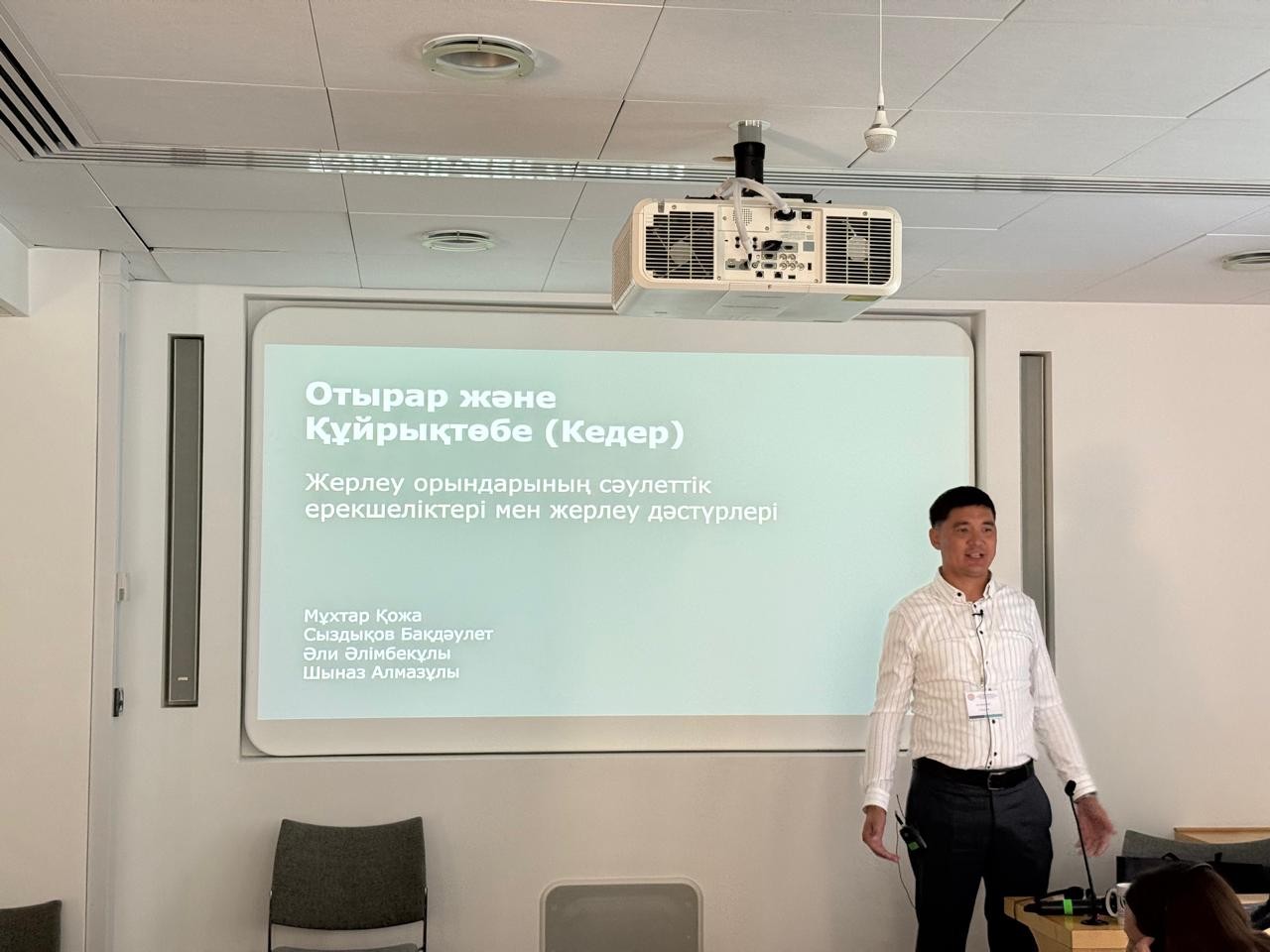
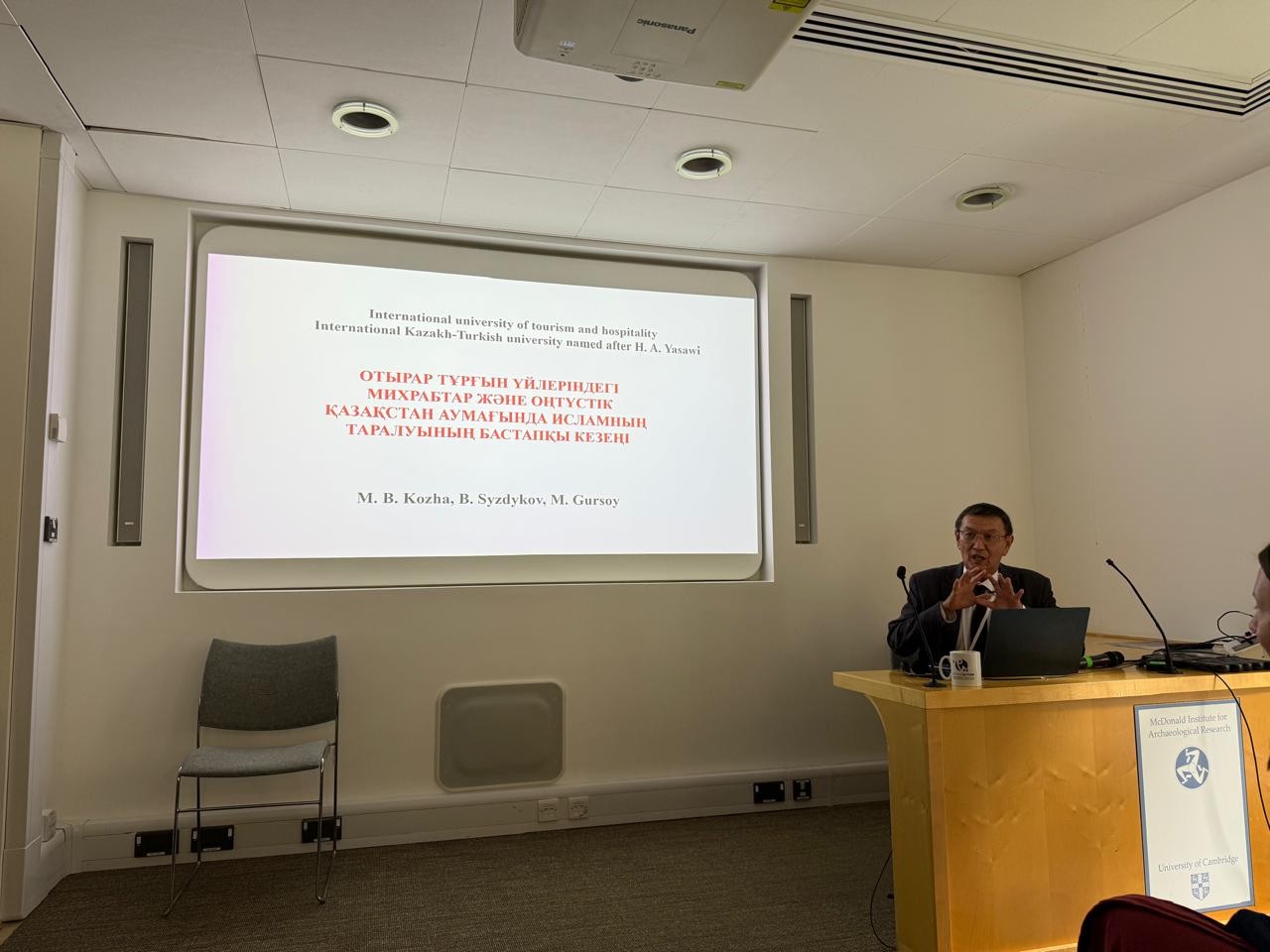
Programme leader Professor M.B. Kozha, Doctor of Historical Sciences, delivered a presentation on mihrabs discovered in dwellings in Otrar’s rabad. He presented the findings of the 2025 archaeological investigations and highlighted their significance for understanding the early spread of Islam in southern Kazakhstan. He also shared the results of his long-term research into the burial site of Abylai Khan.
A. Alimbekuly discussed the architectural features of burial sites and burial traditions identified at Otrar and Kuyryktobe (Keder). B.S. Sizdikov examined the formation of urban culture in the Keles Valley through interdisciplinary research at the Kultobe settlement. Sh. Almazuly presented the principal findings of archaeological investigations at Kultobe and explained the site’s significance for the study of medieval urbanisation.
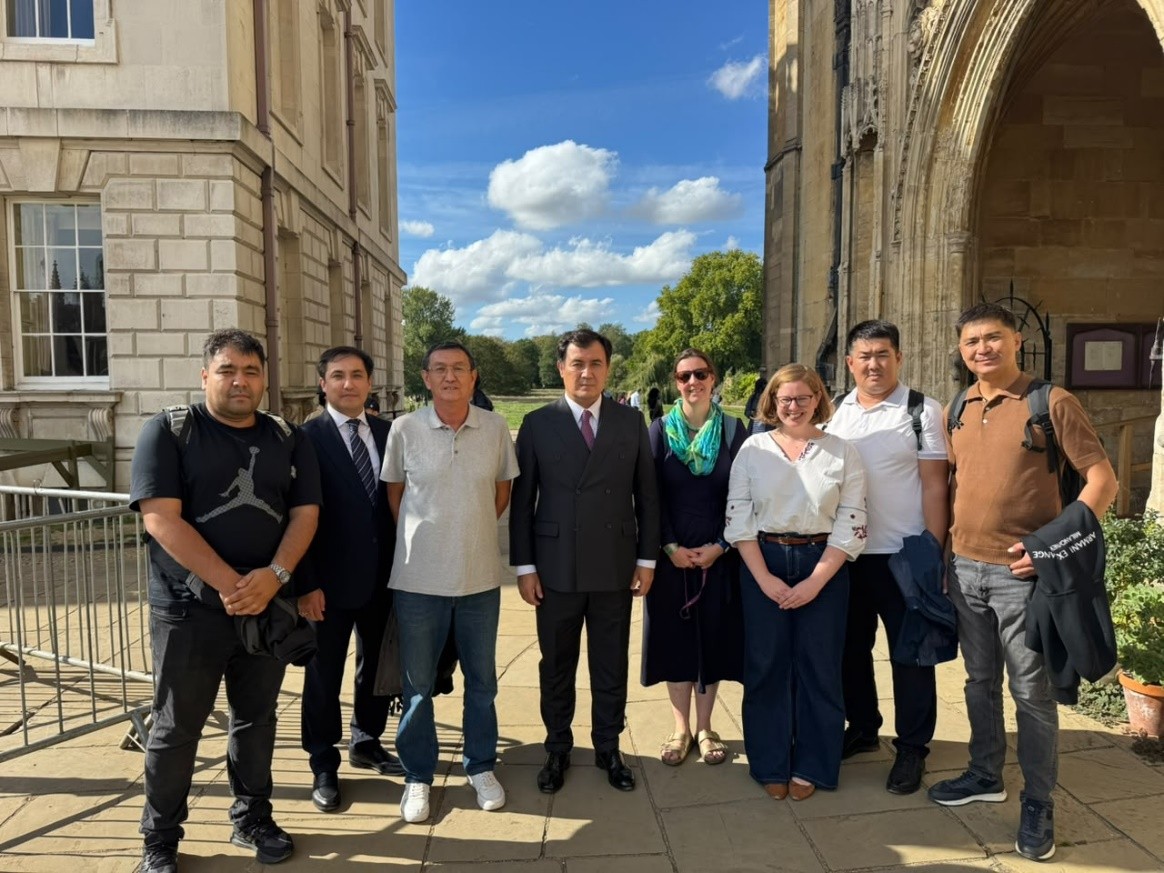
During the visit, the scholars met with Alibek Ass etovich Bakayev, Ambassador Extraordinary and Plenipotentiary of the Republic of Kazakhstan to the United Kingdom of Great Britain and Northern Ireland. Discussions covered the development of academic ties, international research projects in archaeology and history, and opportunities to expand academic cooperation.
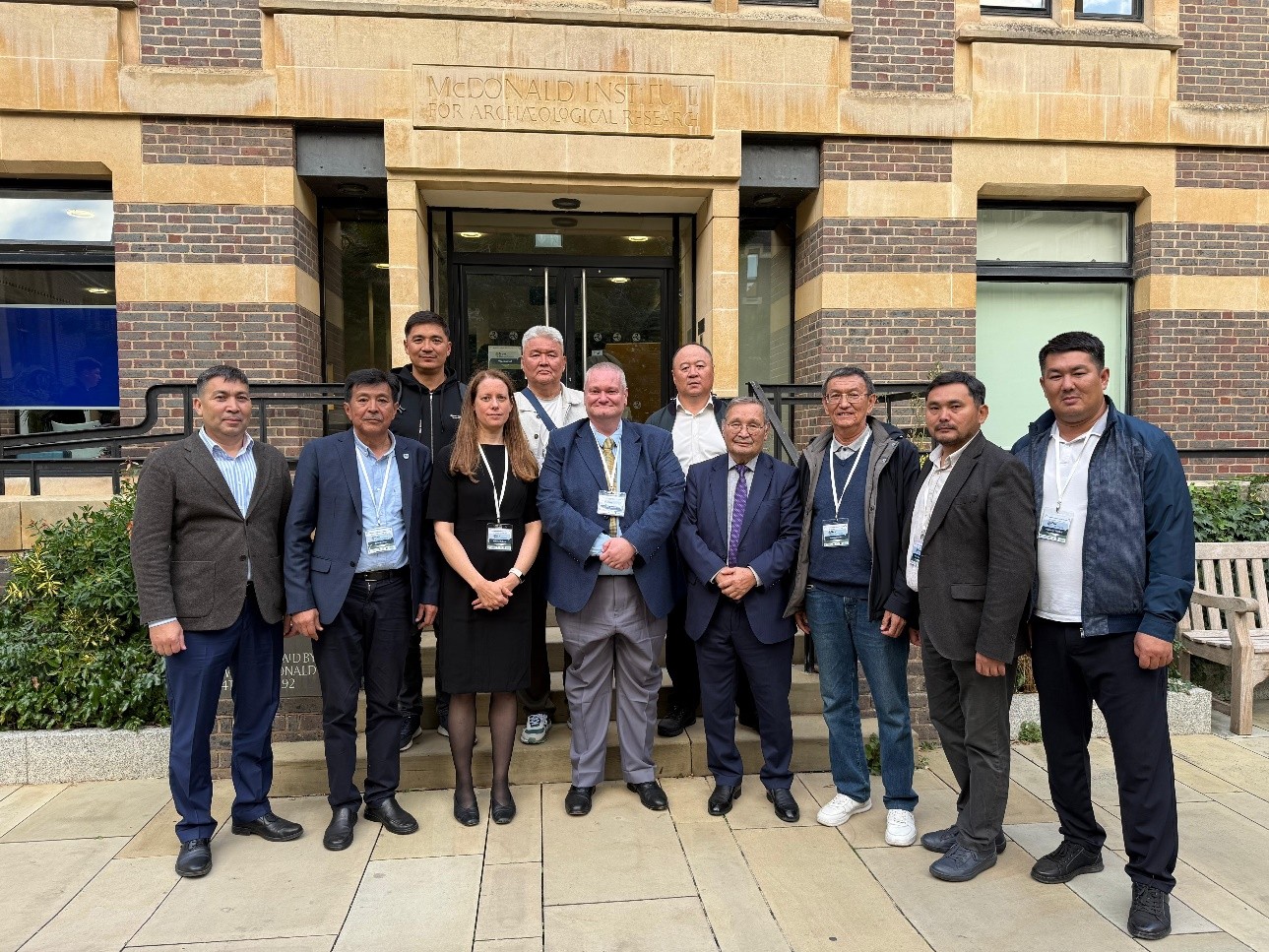
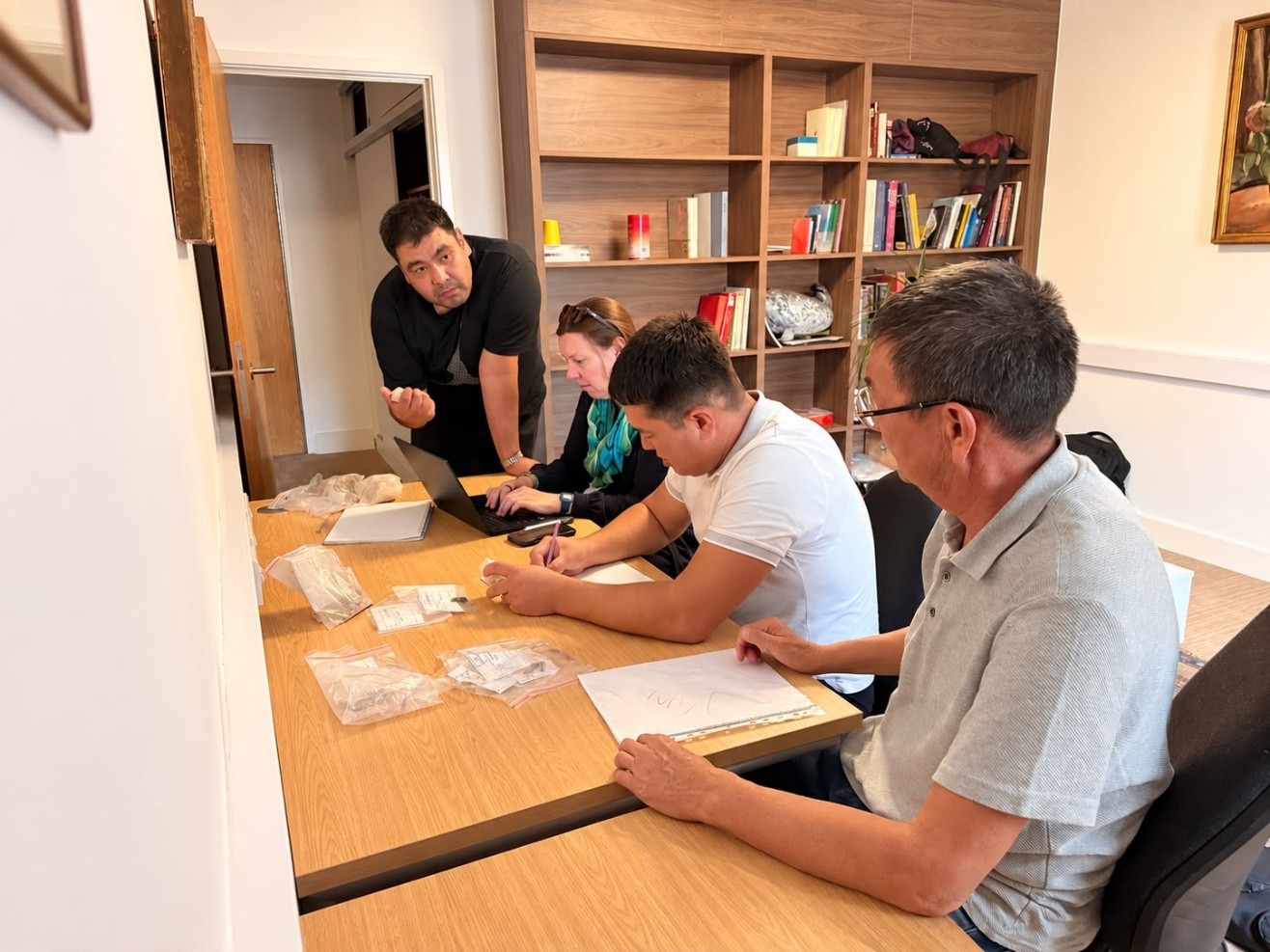
The delegation also held research meetings with scholars from King’s College and the McDonald Institute for Archaeological Research. Participants exchanged experience in modern archaeological methods, the integrated analysis of written and archaeological sources, and the publication of research findings in international journals. They also discussed prospects for developing and implementing joint research projects.


 English